Interview with P&G CEO Bob McDonald
Publish On : March 23, 2026
Publish On : March 23, 2026
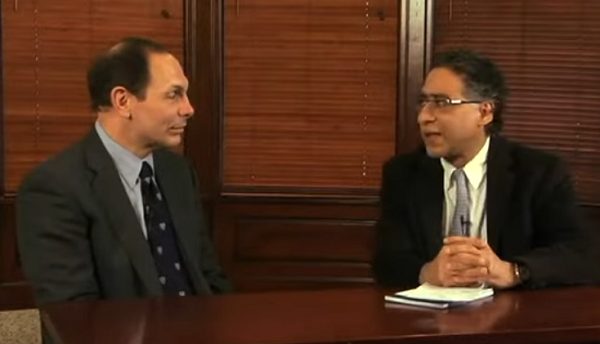
Ravi Dhar: I’m Ravi Dhar, Professor of Marketing at Yale, as well as the Director of the Yale Center for Customer Insights. I’m really pleased to have Bob McDonald here, CEO of Procter & Gamble. He gave a wonderful talk on leadership this morning to the students.
Ravi Dhar: And now I’m going to ask him a few questions related to the business and marketing strategy. Bob, I want to start with the general growth strategy. You mentioned that it can be nicely summed up in touching more consumers in more parts of the world more completely.
Ravi Dhar: Can you elaborate a little bit of that on some of the key pieces of those three components?
Marketing and Growth that Improves Lives
Bob McDonald: It all starts with our purpose, which is touching and improving lives. And then from that, we devolve to our strategies, as you said, Ravi. When you talk about touching and improving more lives, more parts of the world more completely, the more lives is about getting to as many consumers as we possibly can with as many products as we possibly can.
Bob McDonald: Right now, the average consumer in the world, the average man, woman, and child in the world, spends $12 a year on Procter & Gamble products. We’d like that to be $14 a year in five years. Talk about more parts of the world, the idea there is filling out our product portfolios around the world.
Bob McDonald: We’re in about 25 categories in the US. The average American spends $110 a year on Procter & Gamble products. In China, even though we’re the leading consumer goods company and we do about $4 billion a year in business, the average Chinese spends less than $3 a year on Procter & Gamble products.
Bob McDonald: And we’re only in about 14 categories. We have to get all of our categories around the world in all geographies. That doesn’t necessarily mean, though, taking the US product or the European product and putting it in the developing market.
Bob McDonald: We have to design for the consumers in those markets. And then the more completely part is just about getting people to buy more Procter & Gamble products. And really, that’s about things like extending our distribution in the rural areas.
Bob McDonald: There are still many areas of the world where there aren’t economies in villages. And we know that through our distributors, through our sub-distributors, we can get into those areas and create economies. So the way we’re measuring this is in five years, we want to go from 4 billion consumers touch to 5 billion, and from $12 per capita per year to $14.
Bob McDonald: And then, of course, the appropriate financial measures.
Ravi Dhar: You mentioned designing products for China, India a little bit differently, maybe the price points, maybe even the benefits. And Jeff Immelt at GE has talked about innovation can be command and control and sitting in Fairfield and then spreads to remove certain features and sell it in China and India. And so one of the interesting things as a scholar or academic for me is that we need to really innovate both at the top end, if you like, sort of more for the US or developed markets, and at the bottom of the pyramid, if you count the markets in sort of developing countries.
Ravi Dhar: What kind of challenges does it face in the innovation? Or do you think it’s the same way you do it or slightly differently?
Cultural Differences That Lead to Product Innovation
Bob McDonald: Well, it’s a huge challenge. Because what we believe is you, our mantra is we want to delight, don’t dilute. What many companies do is they take a top tier product and they dilute it for the bottom of the economic pyramid.
Bob McDonald: In our experience, that doesn’t work. We have to innovate discreetly for every consumer, no matter where they are at the economic pyramid, based on their needs. Being in a consumer goods business, it creates a great discipline but a great opportunity because consumers are so different.
Bob McDonald: I’ll give you an example. I led the hair care business for Procter & Gamble in Asia in the 1990s. An Asian hair is twice the diameter of a Caucasian hair.
Bob McDonald: Well, you remember your geometry. That means there’s six times the surface area. So the Pantene that a Japanese consumer would buy would have a lot more conditioning than the Pantene that an American or Western European would buy.
Bob McDonald: And if we got that mixed up or if we tried to give them the same product, they both would be dissatisfied. So you can’t titrate toward the middle. You’ve got to allow those differences.
Bob McDonald: Another example is in the Philippines. People do their laundry by hand. Water is very expensive.
Bob McDonald: I lived there for four years. Water came by my house only a half hour each day. I had a pump on the street.
Bob McDonald: We would pump it into a tank in our property and then from that tank to the house. But it was very expensive because you only had it a half hour a day at most. And Filipino consumers are very cleanliness conscious.
Bob McDonald: So they really soap their clothes. They do their laundry by hand. They really soap them.
Bob McDonald: And they judge their soap solution based on the amount of suds. Well, the problem is because they create so many suds to get their clothes clean, it takes them five rinses to rinse their clothes from the suds. We developed a product called Downy.
Bob McDonald: You’re familiar with it here in the United States. But it’s a very different product where it provides a little bit of freshness, a little bit of a softness, but importantly, has cations that sequester those anions of the soap and allow one rinse. So it’s called Downy Single Rinse.
Bob McDonald: Saves money because you eliminate the four other rinses. So the product virtually pays for itself because you save money and water. Those products are discreetly designed for those consumers.
Bob McDonald: And frankly, I think that’s the future of the world. If you think about marketing, your discipline, the ultimate is a one-on-one relationship with every consumer in the world. That’s going to be possible with digitalization.
Bob McDonald: The first company who achieves that will win because the brands you know, the brands you love, are ones that you’re extremely loyal about and you have a relationship with that brand. Now, it may not be possible today to create that one-on-one relationship, but we got to get as close as we can get with that. And eventually, we have to create that one-on-one relationship to create indispensable brands.
Ravi Dhar: It’s interesting you mentioned about sort of the different countries and how they might be, whether it’s how they wash or all the infrastructure around washing might impact what insights you can leverage to create better products. And of course, you have this challenge of Gillette. One of your acquisition was often sort of a little bit more command and control based in Boston.
Ravi Dhar: And let’s sort of generalize. It seems to me, varies a lot by the type of product category where these things become a lot more important and costly to develop also.
Self Care Products for Daily Living…Globally
Bob McDonald: It does. It varies by product category and it varies by what I would call the maturation of that category. When I started with Procter & Gamble, I was the tied brand manager in 1984 in the United States.
Bob McDonald: At that time, tied at about a 20% market share. The number two laundry detergent was Wisk run by Unilever at the time, had a 12% market share. And tied only came in one form, which was powder tied regular scent.
Bob McDonald: Today, tied has double that share, over 40%. But tied comes in many forms. You can get liquid tied, you can get tied with bleach, you can get tied with Febreze.
Bob McDonald: We just launched a tied for fitness clothes. And what you find is, if you’re the one who has the consumer insight, you can segment the category. And if you segment the category, you’re gonna create better loyalty, more indispensability, and as a result of that, you’ll have a higher market share.
Bob McDonald: So, it always behooves the marketer to get close to the consumer and get that insight that creates the segmentation. And we’re doing that on Gillette products now.
Ravi Dhar: So, I heard you mentioned earlier about the purpose. I like this, you know, I might have it wrong, but I heard that it used to be for a long time, improves the lives of world’s consumers. And when you came along, you added now and for a generation to come.
Ravi Dhar: And I find that interesting, because there’s obviously a lot of emphasis on both sustainability, but environment as part of a business strategy as well, whether it’s ecomagination or GE. And the question I have for you a little bit, one of it is, how do you manage the tension? So, on one hand, now for generations to come seems like there’s no tension here, but it’s a little bit like in the leadership thing you talked earlier about, if it’s easy versus it’s difficult.
Ravi Dhar: And so oftentimes there is a tension between what’s good now and what’s good for the generations to come. Yes. So, I was wondering if you can, how do you sort of, given that this is a challenge managers face all the time, what is some ways you guide your teams to think about these trade-offs, or if you don’t see them as trade-offs?
Ravi Dhar: And secondly, could you give an example in any of the business lines that how this tension was handled between what’s good now for generations to come kind of an idea?
Sustainable Products that Meet the Needs of Generations
Bob McDonald: Well, we added that collection of words, now and for generations to come, a couple of years ago. We did that to recognize the fact that if we’re gonna succeed as a company in the next 172 years, we’ve been around 172 years now, we’re gonna have to take care of the environment in which we live and work. This has always been part of the company, but we thought calling it out in the purpose would even strengthen it.
Bob McDonald: So we have a sustainability strategy where we wanna introduce $50 billion of sales of products that are better for the environment. We wanna reduce our carbon footprint, and we want our employees involved in service activities, philanthropic activities externally. We think that it’s not good enough for companies just to do well financially, they also have to do good.
Bob McDonald: Consumers now are concerned about the products they’re buying and the companies they’re buying into, so we’re trying to do a better job. In terms of trade-offs, we talk a lot about having an and culture at Procter & Gamble. Many times, leaders look at opposing points of view and think that it’s not possible to do and, they think of it as an or.
Bob McDonald: Short-term versus long-term. Productivity versus innovation. You could go on and on.
Bob McDonald: We don’t believe that. We believe that you can find another way, an and way, and we actually teach our leaders how to deal with those dilemmas. We do it through our formal college training.
Bob McDonald: We call it P&G College. We also do it through our informal training in order to get at the fact that you don’t have to have those trade-offs, that you can oftentimes find another way. At times where we’ve done that, well, there was a time not too long ago where we had to come to terms with the fact that we had been underperforming our competition in terms of top-line growth since December of 2006.
Bob McDonald: That was a painful, painful thing to realize, and many people in the company were wondering, well, do I put priority on profit, or do I put priority on top-line growth, and we developed a strategy that said, we’ve gotta prioritize top-line growth right now because we’re not getting our profit in the right way. We’re getting our profit through margin increase, and that margin increase is not helping top-line growth. There was some paralysis in the organization.
Bob McDonald: But the beautiful thing about the culture of P&G is you identify an issue like that. We call it the moose. You identify the moose, you put the moose on the table, and then people solve it, and as a result, we identified that.
Bob McDonald: We promised we would get back to top-line growth. We did it a quarter earlier. We did it July through September, rather than October through, I’m sorry, July through September, rather than October through December.
Bob McDonald: October through December, and as a result of that, we’re now earning the profit in the right way by delivering the top-line growth. I don’t think it has to be an or.
Ravi Dhar: I totally agree with that, and it’s sort of going something personal. At our school, you saw our mission as leaders for business and society, but a lot of the outside world tells us, you know, there’s an impression that if you don’t care about the society, you might be a touchy-feely place. You can’t be good for business, so it’s really something that resonates in the marketplace with us also, where people often feel, how can you do and?
Ravi Dhar: It’s usually or, so I think that it…
Bob McDonald: I think you’re right because I don’t understand how a human being can have incongruence in their life. Human beings aren’t that way, and so how can, you know, we believe that if we’re gonna touch and improve lives, just like the statement of your school of management, if you’re gonna touch and improve lives, you have to have that pervasive in everything you do, in your brands, in your philanthropy, in your free time, and I think that human beings are wired a certain way. I don’t think it has to be.
Bob McDonald: I don’t know how you can compartmentalize it and say that you should touch and improve lives here, but destroy lives here. Human beings can’t deal with that incongruence, I don’t believe. Interesting.
Ravi Dhar: You mentioned also in your talk that P&G has around 20 brands with sort of a billion dollars or more of revenue and another 20 around half a billion dollars. Any examples which you think are more sort of purpose-driven and purpose-inspired, benefit-driven kind of in your business portfolio or outside that you admire in terms of the broader brands in the marketplace?
P&G Products Make Lives Better
Bob McDonald: Well, you’re asking me to tell you which of my children I love more, so that’s hard to do, but let me give you an example. An example I like to use is Pampers because Pampers is our largest brand. It’s about $8 billion in global sales a year.
Bob McDonald: Pampers, for years, struggled in our company, and frankly, it struggled because we were too internally focused. We were focused on the diaper, the tapes, the back sheet, all the product technical features. A few years ago, our leadership group on Pampers decided they would focus on a purpose, and the purpose would be caring for baby’s development.
Bob McDonald: And that took the focus and put it where it belonged, on the baby, on the mother, on the development of the child, not on the diaper. As a result of that, we became much more innovative because that freed degrees of innovation. We also were able to discover insights that we wouldn’t have discovered previously.
Bob McDonald: When we were in India, for example, we couldn’t get mothers to use the diaper. Disposable diapers tend to get used for an occasional event before they get used every day. And the occasional event in many developing markets is when the baby sleeps because the mother wants to get a full night of sleep, and the disposable diaper is better than no diaper at all, which is the way most children sleep around the world, is no diaper at all.
Bob McDonald: And the baby wakes up. And Indian mothers told us, well, I’m not gonna buy that diaper if it’s about me, if it’s about convenience for me, because I care about my baby. So what we did was we did some clinical studies, and we discovered, not surprisingly, that the baby who sleeps through the night develops better than the baby who wakes up every four hours because they urinate.
Bob McDonald: We then talked to Indian mothers about that, and they loved it. They loved the idea that they were caring for the development of their baby by giving them a diaper that allowed them to sleep all night. The other thing we did is we found partners to help us.
Bob McDonald: We have a partnership with UNICEF where for every pack of diapers bought, we work with UNICEF to donate a neonatal tetanus vaccine for a mother somewhere in Africa. That’s where the disease kills mothers and kills babies. We now believe through the sale of Pampers around the world, we’re gonna be able to eradicate neonatal tetanus from the face of the earth by 2012.
Bob McDonald: If we hadn’t had that original broadening of the purpose beyond just the technical features of the diaper, I don’t think we would have had the innovation that resulted in the UNICEF relationship or in the insights that are driving the business around the world.
Ravi Dhar: No, I think it’s a great example of what we call being too product-focused, and then you have, as you, I think, put it very well, then the degrees of freedom are constrained to the meds and MIPS and other specifications on which the diapers or computers vary, but if you focus on the problem you’re trying to solve, like better child sleep, better brain development, and so on, suddenly broadens the link between a product like diapers to like happy well-being of the child, and it suddenly opens up a lot of different ways.
Ravi Dhar: So I think it’s a really nice.
Ways That P&G Products Are Utilized for Daily Life
Bob McDonald: We’ve done the same thing. Do you want another example? We’ve done the same thing on Always, which is our feminine hygiene napkin.
Bob McDonald: In many cultures around the world, when women menstruate, that’s thought to be a bad thing. There are some religions where menstruating women cannot go into the temple during the time they’re menstruating. There are many cultures in sub-Saharan Africa where, for example, schoolgirls can’t go to school while they’re menstruating.
Bob McDonald: They’re not allowed in the school. Well, you can imagine, Robbie, if you’re a student and you don’t go to school one week every month, you’re gonna quickly drop out of school and the girls don’t get educated. So we go in to those societies.
Bob McDonald: We teach them about menstruation. We teach them it’s a good thing. In fact, the selling line we use on Always is have a happy period.
Bob McDonald: It’s natural. It’s a good thing. And we provide our products to take care of the condition.
Bob McDonald: So again, it’s an example of defining the purpose broadly and in dealing with the societal challenges and using our products to do that.
Ravi Dhar: It’s a great example. Let me ask you a question I get often asked by some of the senior executives in sort of the consumer goods space, which is the consolidation that’s happening in retail, not just in the U.S., but certainly Europe and other countries. And so one issue is obviously your customer.
Ravi Dhar: They are your customers. You’re competing at some level for profits with them. How do you think it’s becoming, how you operate your business marketing or sales, like traditionally Procter and others have had sort of a separate sales team, separate marketing team doing what they have to do.
Ravi Dhar: And some of the things I hear people say that this will have to change as more and more consolidation happens. What do you see as some of the challenges for the way the business is conducted? Is it obviously you have to innovate more to stay ahead?
Ravi Dhar: What are some of the important issues that you see as consolidation happens?
Adapting to Consolidation Through Innovation
Bob McDonald: Yeah. It’s interesting. We’re not seeing as much consolidation as you would think.
Bob McDonald: Our largest customer globally is what we call high-frequency stores. These are stores in places like India, China, Indonesia, which literally are the windows in somebody’s home and people selling the products out of those windows. Those kinds of stores represent just less than 20% of our business, and they’re growing much faster than the global customers that we deal with around the world.
Bob McDonald: Our largest customer, as we’ve disclosed in our annual report, is Walmart at 16, 17% of our business. That’s stayed relatively constant. In the last five years?
Bob McDonald: In the last five years or so. Even though Walmart is continuing to grow globally, the growth of these small stores is so great, particularly when there’s macroeconomic growth in the world. There’s so many consumers who aren’t being served today that I think that will continue to be the force to reckon with.
Bob McDonald: In that case, we work through distributors in order to get to those consumers in those rural areas where there’s virtually very little economy. In the case of Bob McDonald: Walmart, we have a large team of people in Bentonville that calls on Walmart. Walmart is our partner.
Bob McDonald: Mike Duke is a personal friend of mine. I admire him a lot, just like I do the other CEOs I deal with. And we’re working with them as partners to enhance their business.
Bob McDonald: At the same time, we’re also cognizant that retailers have private label brands, which are our competition, and we believe there’s no reason that consumers should have to buy any other brand than a P&G brand. So the challenge for us, as you framed it, is we simultaneously, it’s an and again, we simultaneously have to deal with large global customers who are expanding throughout the world and high-frequency stores, which are very local and inherently by their nature. It’s an and.
Bob McDonald: We have to deal with partnering with retailers like Walmart and others. They rely on us for our consumer knowledge and insights to set their stores, but they also have a private label that’s a competitor of ours. Again, it’s an and.
Ravi Dhar: So I want to pick up on that private label aspect you mentioned, because some consumer package goods companies do make private labels. And if you are an economist, which I’m not, as a market economist would say, well, you already have the factory, you might have the excess capacity, the marginal cost is not there. You know how to make this, you know how to ship this.
Ravi Dhar: As a marketer, I feel like, obviously I encourage a conflict between the idea of creating differentiation and then there’s another manager sitting in Cincinnati whose job is to minimize that if they are doing private label. But what some other CPG companies do, I think, is they go in an adjacent category, which is sort of try to avoid the conflict, which is I make ketchup, I won’t make private label in ketchup, but I make tomato juice, I can make soup. So I don’t know what Brockton makes any private labels at all or not.
Ravi Dhar: If it doesn’t, I’m sure this question must have come up over the years. And strategically and also as a business, like what is the sort of the thinking why this doesn’t make sense for us to do?
Private Label Manufacturing in the Consumer Product Space
Bob McDonald: We are involved in some private label manufacturer. It’s in our Duracell business and it’s more a legacy of the Gillette acquisition. We do not want to make private label.
Bob McDonald: One of our five strengths as a company is consumer knowledge. And second one of those five strengths is innovation. We spend $2 billion a year on R&D.
Bob McDonald: We’ve spent $3 billion since 2001 on consumer knowledge. We’re a company where innovation is our lifeblood. We simply have to innovate and we have to bring new innovations to market to touch and improve lives.
Bob McDonald: I would find it very difficult to create innovations and then hold them back from retailers. And I think retailers, if I had a private label, would find it part of their negotiation to ask me for the latest innovation, which really wouldn’t make much sense for our company. So we won’t be a private label producer.
Ravi Dhar: So it’s almost like the ones who do it, you think up, you don’t want to say those in so many words, but it’s probably the ones who haven’t been able to innovate in their category.
Bob McDonald: I think innovation’s a differentiator.
Ravi Dhar: I want to ask you something, just a very general question on how the marketing, suppose you were giving advice to students going into marketing at this stage, what are some of the exciting aspects, areas of you, how marketing has been changing, what skills are required to succeed in this compared to, say, 10 years ago? Is it the same skills? Do you see any changes there?
Some New and Exciting Aspects of Marketing
Bob McDonald: No, I think marketing is exciting today because it’s so much broader than when I studied it in my MBA program. When you look at all the media that are available for marketers today, again, if you go back to what I said earlier, if you think of the ideal being that one-on-one relationship that creates an indispensable brand or an indispensable relationship, there’s so many ways to accomplish that today. Social media like Facebook, digital, still in store just like it used to be.
Bob McDonald: These small homes that are stores in developing markets, there’s just a plethora of opportunity and being able to be selective and choose how to do it and then have a rate of return that will help you differentiate or discriminate between the different methods, I think it’s incredibly exciting today. In the end, it also comes back to, do you have the consumer insight? You’ve gotta have the insight.
Bob McDonald: That’s why when I travel, I go in homes, I watch people use our products, I go shopping with consumers, I look for tension in their lives and if I can find the tension, then I can come up with an idea that might help make their lives better and then I have to turn that into a new product or service or a new approach to marketing. I think it’s very exciting to be in the marketing field today and I think marketing is defined more broadly today, has more potential today than ever before.
Ravi Dhar: I wanna end by asking, you spent almost half a day here giving your talk, having lunch with the students, any impressions that you took away about this place that were the students or anything else?
The Yale School of Management
Bob McDonald: Well, I love the School of Management at Yale because it’s not just about taking care of the business or making the business successful but it’s about the individual contribution to society and that is very consistent with the Procter & Gamble purpose of touching and improving lives. Not just VR brands, we have to do that and we have to deliver profit, we have to deliver shareholder return but also about contributing back with our philanthropy or with our community service and I just think there’s a great congruence there between what Yale’s trying to achieve when I’m, what we’re trying to achieve at P&G and I think that’s the future. I think what you’re gonna find is it’s no longer gonna be acceptable.
Bob McDonald: Consumers won’t buy the brands of companies that don’t take care of the philanthropy, don’t take care of the environment and don’t provide community service. Thank you so much for doing this. Thank you, Ravi.
Bob McDonald: It’s great to be with you.